ProjectOverview
I designed and built Roots and Tubers 2 Go, a generative AI chatbot that helps researchers submit complete potato and sweet potato germplasm requests to the International Potato Center (CIP) genebank. Instead of months of back-and-forth emails, the bot guides users to provide the right traits and conditions up front, supports file uploads, and sends a structured summary to the CIP team so requests can be processed in days, not months.
TheProblem
Scientists encounter difficulties searching for accessions using online databases with limited search functionality, that were difficult to navigate, and produced too many results to be useful. Many times, they ended up emailing CIP directly for assistance. As scientists weren’t always well versed in the information CIP needed to conduct accession searches, months of back-and-forth emailing was often required to narrow requests. This caused delays and slowed progress in the research and development of these important crops.
MyRole
I worked as a UI/UX Design Specialist and Full-stack Engineer, collaborating closely with stakeholders, iterating on prototypes, and implementing the Streamlit-based experience.
Solution
I built Roots and Tubers 2 Go, a GenAI chatbot that guides researchers through a structured germplasm request by collecting the exact traits and conditions CIP needs, instead of letting requests come in as incomplete emails.
Researchers can upload supporting files inside the chat, and once the bot has everything, it creates a complete request and emails the CIP team with the requester’s email, collected traits, and attached files (stored per session).
WhatI Built
This project was unique as I got to work at the intersection of UX storytelling and GenAI product development, designing a guided conversational experience.
Process
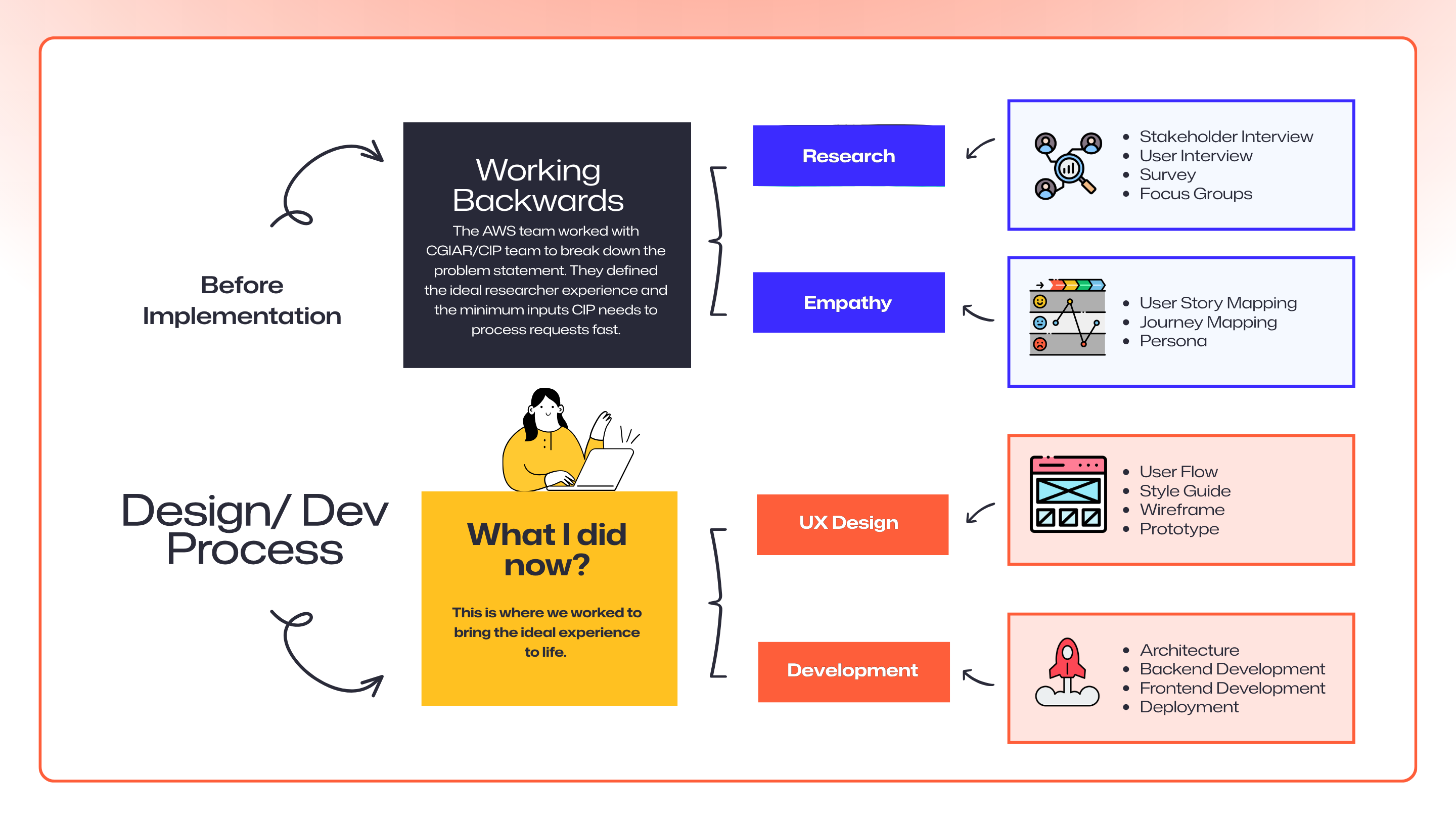
What I did as a UX Designer
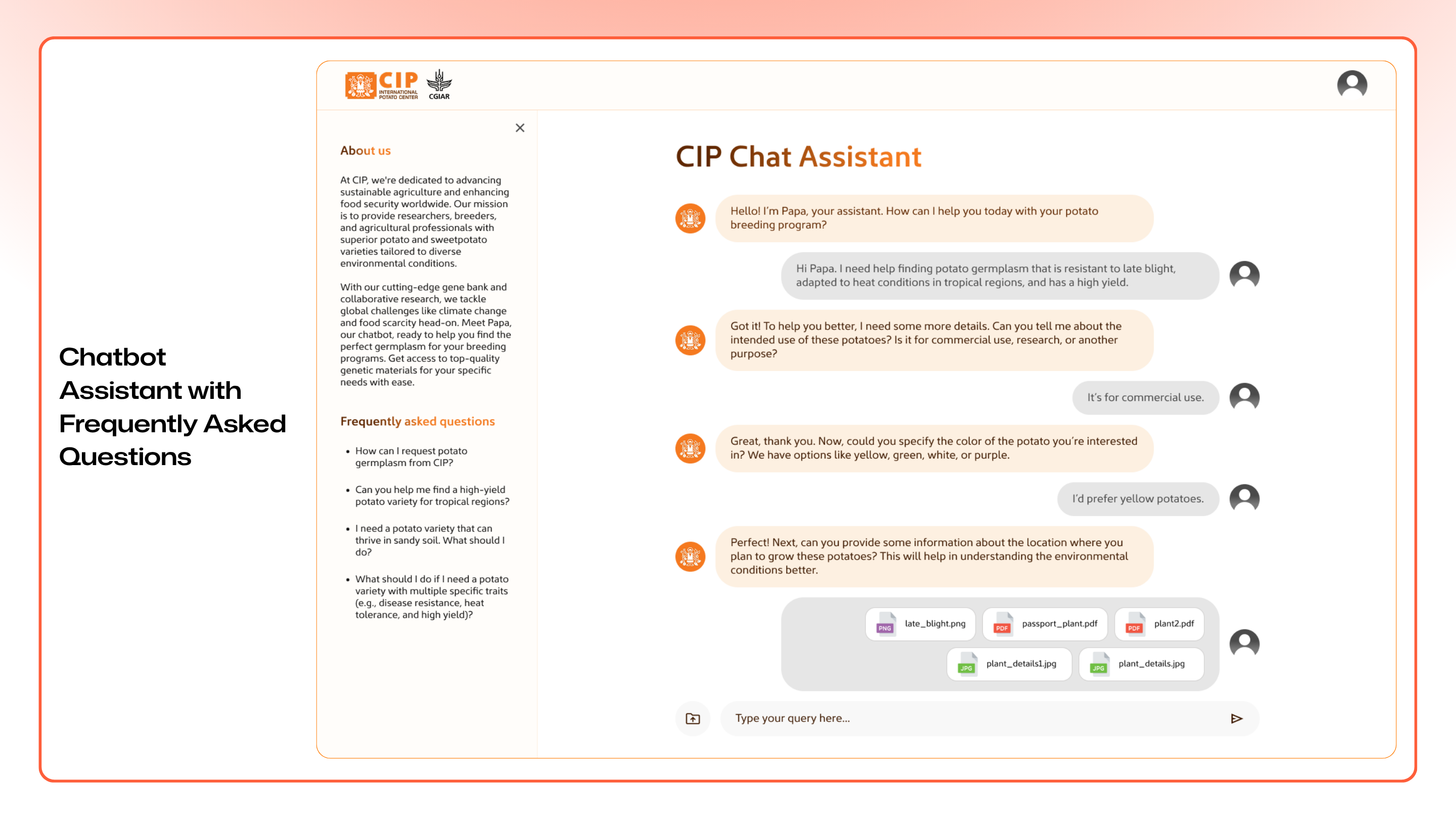
Designed the end-to-end user flow : I defined the complete flow from login → chat → request completion, including error handling for invalid emails and entry points for users who don’t know how to start.
Crafted the conversation experience with “guided collection” : I designed the interaction so the chatbot progressively asks for missing traits using a trait table, ensuring the user provides complete request details instead of dumping unstructured text.
Added UX elements that reduce friction and increase confidence
Storytelling + future vision prototyping : I storyboarded the user journey and built future-scope concepts like chatbot suggestions and an advanced search results page to show how the solution could scale beyond the POC.
I made key UX decisions like:
FAQ quick-start to help users begin instantly
Clean, interactive UI with prompts, buttons, and file upload to guide the user step-by-step
Brand alignment with CIP visuals to build trust and reduce “unknown tool” hesitation
What I did as a Developer
Built the Streamlit chatbot interface: I implemented the core experience in Streamlit so users can input requests, upload files, and complete the flow in one place.
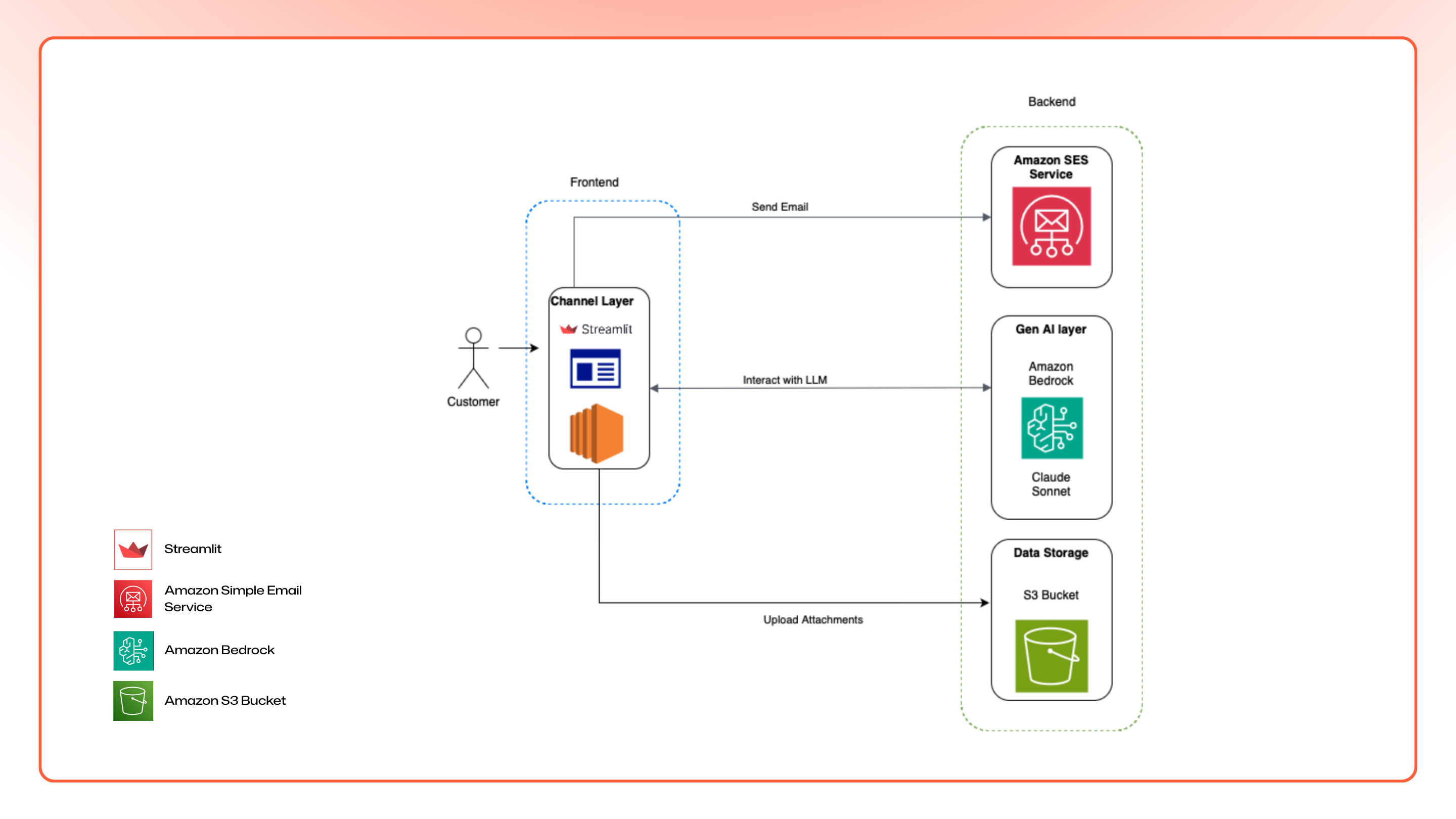
Integrated GenAI with Amazon Bedrock (Claude Sonnet) : When a user enters a query, the app triggers Bedrock and uses the LLM to respond while collecting trait information needed for the request.
Built email summary automation (SES) : After collecting all traits, the system sends a structured email summary with the traits and S3 attachment path, enabling clean handoff to CIP without manual copying or follow-ups.
V2 (Forward-Thinking Exploration)
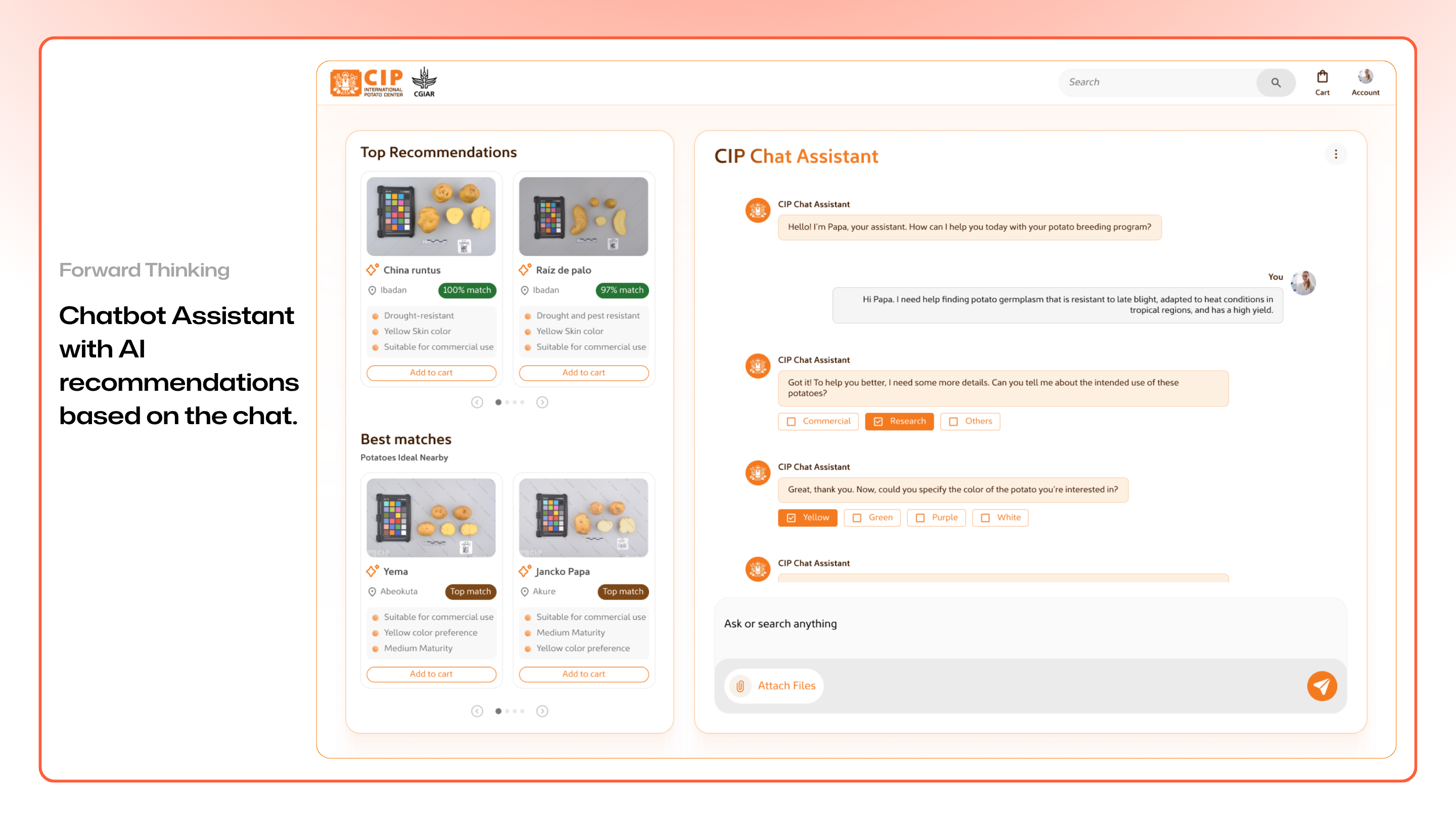
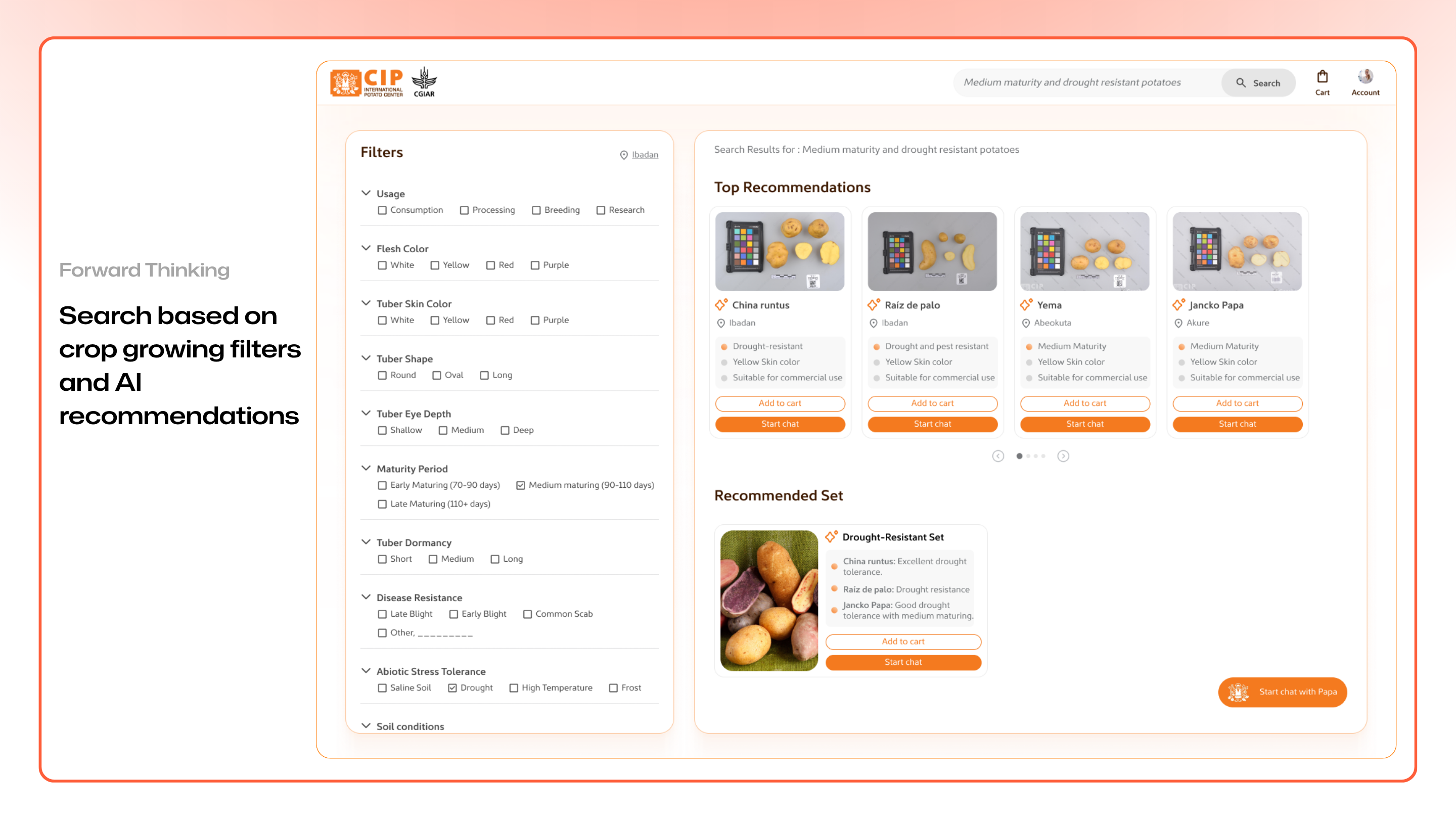
I explored a V2 direction to scale the chatbot beyond basic request intake by adding new capabilities and improving how users discover and refine germplasm requirements.
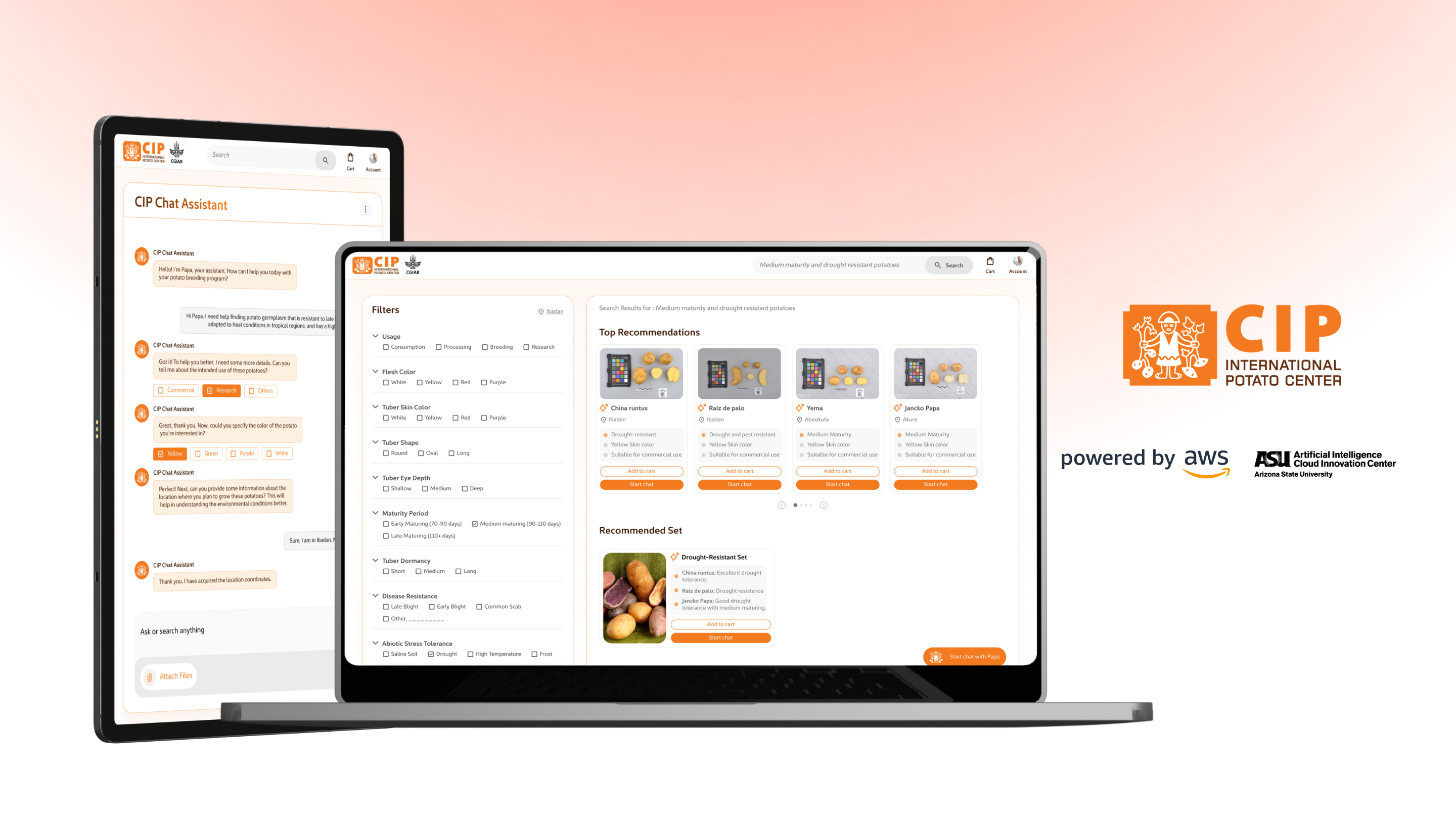
I prototyped chatbot suggestions to guide users proactively based on chat history, helping them complete requests faster and with fewer missing details.
I designed a dedicated search results experience with advanced filters, showing how the product could evolve into a richer discovery workflow instead of just a conversation thread.
I approached V2 as a roadmap for real-world adoption, focusing on scalability, usability, and deeper researcher workflows as the solution moves toward production.
Industry Impact
The CGIAR chatbot solution is a testament to the power of collaboration and the transformative potential of AI-driven technologies. By addressing the longstanding challenges faced by the scientific community in accessing and requesting potato and sweet potato germplasm, this project has paved the way for a more efficient and user-friendly approach to agricultural research and seed bank management.
Potential for Wider Application
Through this innovative chatbot, the CGIAR and CIP teams have demonstrated how cutting-edge technologies can be leveraged to revolutionize the way organizations manage and utilize plant genetic resources. As the solution continues to evolve and expand its capabilities, the impact on the broader agricultural landscape is poised to be profound, driving advancements in crop development, food security, and sustainable agriculture.
Why it translates well to other departments
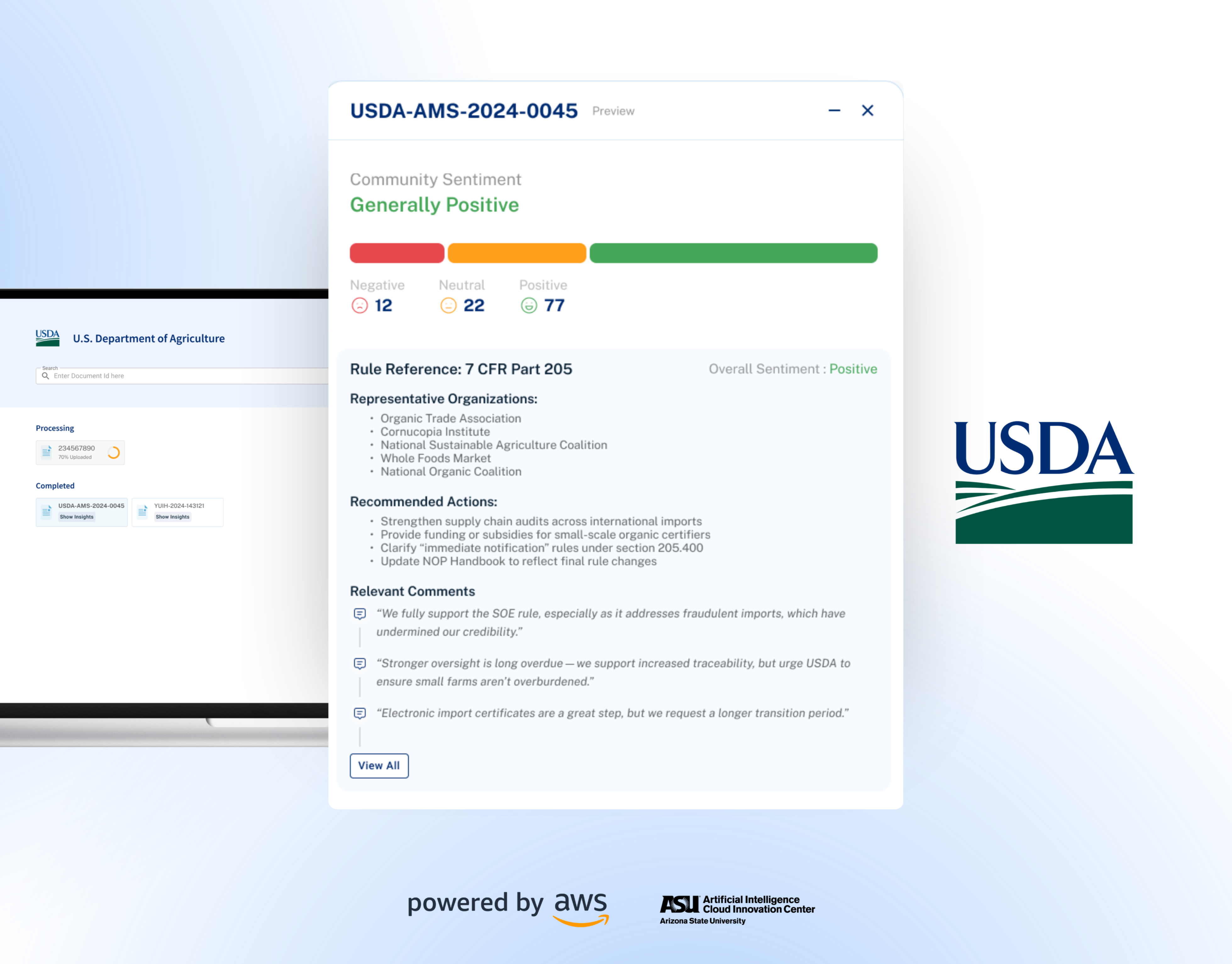
The workflow is universal: intake → review → prioritize → follow up → close. Any agency handling traffic complaints, nuisance reports, or non-emergency issues can reuse the same lifecycle.
Configurable “policy layer”: statuses, beat/precinct mapping, role permissions, and routing rules can be tailored per department without changing the overall architecture.
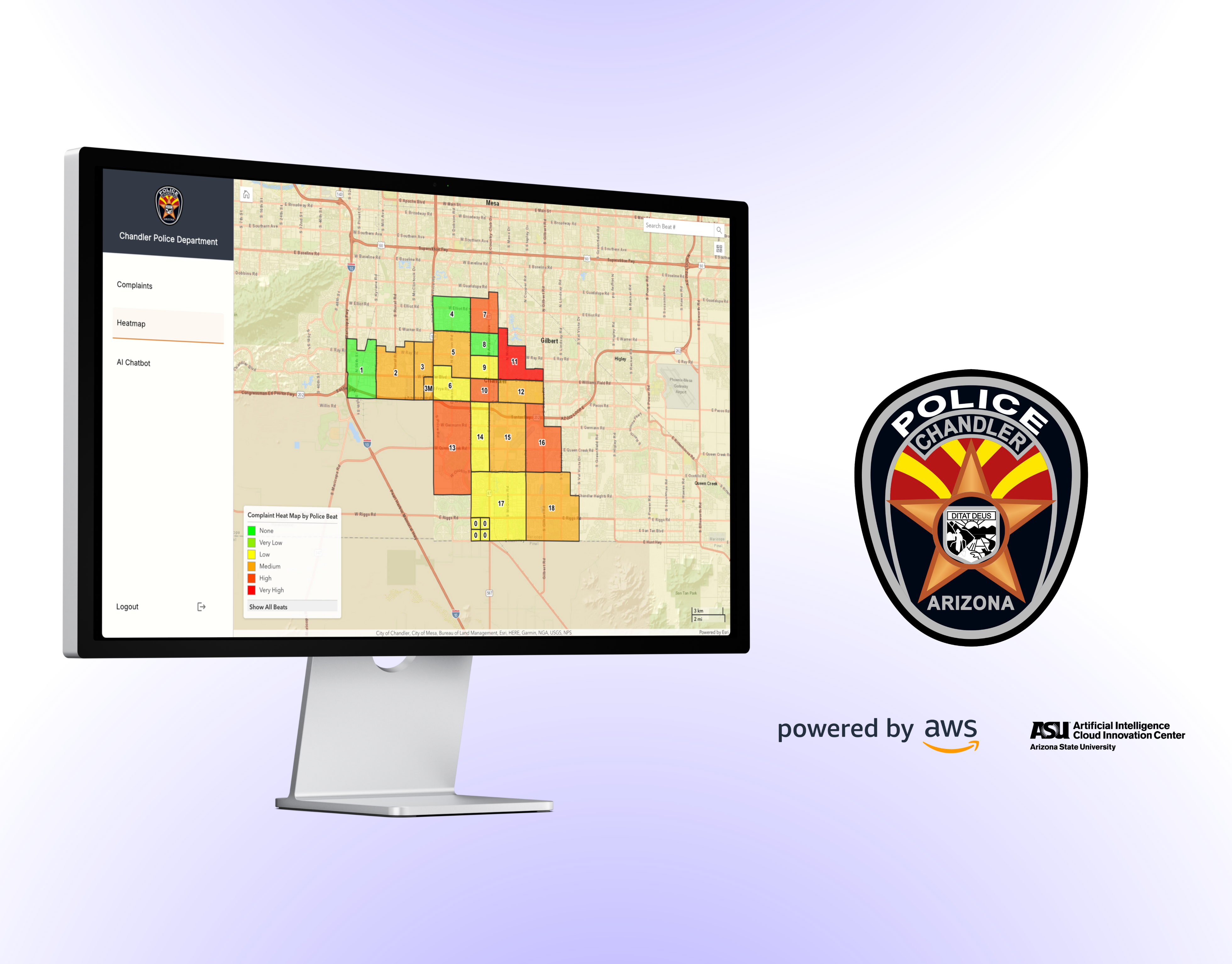
GIS plug-in approach: if a city uses different mapping sources (ArcGIS, local GIS services, or alternative GeoJSON layers), the heatmap module can swap data sources while keeping the same UI/UX pattern.
Chat-based access scales adoption: natural language query is especially useful for non-technical users (command staff, analysts, traffic units) who want answers fast without learning complex filters.
TechStack
Streamlit (frontend experience and interaction layer)
Amazon Bedrock (LLM orchestration)
Amazon S3 (session-based document storage)
AWS SES (email summaries and handoff)
The app is built with Streamlit. Each user message triggers Amazon Bedrock (Claude Sonnet), which responds and collects trait details. Uploaded files are stored in S3 under the user session. Once the request is complete, SES emails a summary containing traits and the S3 document path for the CIP team to process.
ClientFeedback
“We encountered a recurring issue where user requests for germplasm recommendations were sent to various departments across the entire center instead of using the designated online system. This often led to lengthy and stalled email exchanges, causing frustration. To address this, we sought a solution leveraging artificial intelligence for more immediate interaction. By working backwards, the ASU AI CIC helped us understand users' most urgent problems and focus on solving them. By the end of the workshop, we had a clear idea of what needed to be improved in the request system. Together with AWS, we co-created a chatbot to quickly gather information and provide germplasm recommendations, reducing processing time from months to minutes. Following the workshop AWS then developed a pilot chatbot in just a few weeks. Looking ahead, we plan to use AI to enhance the quality of the querying, matching the query result to the available germplasm in the CIP Genebank and integrating it with the requesting system. We aim to also improve the information to users by integrating CIP databases with external online information”